
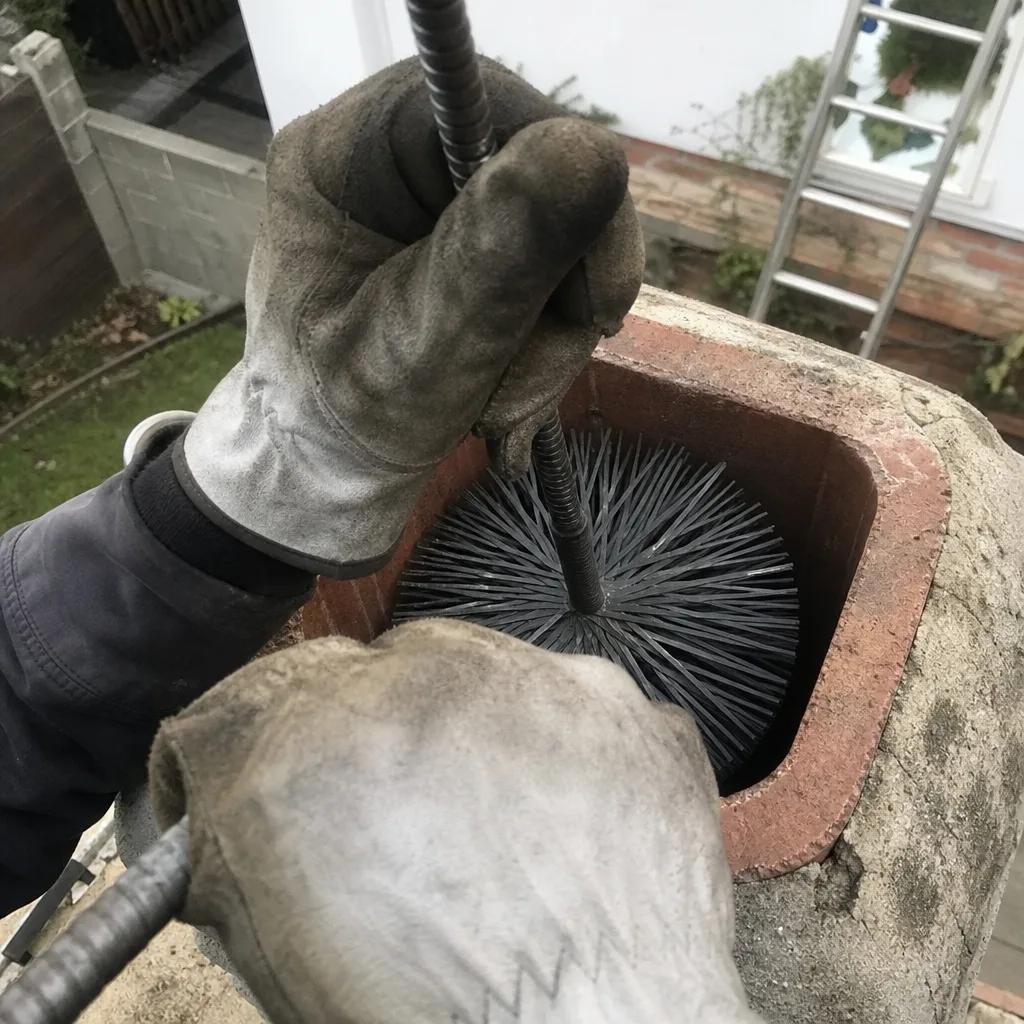
 Sweep & inspection
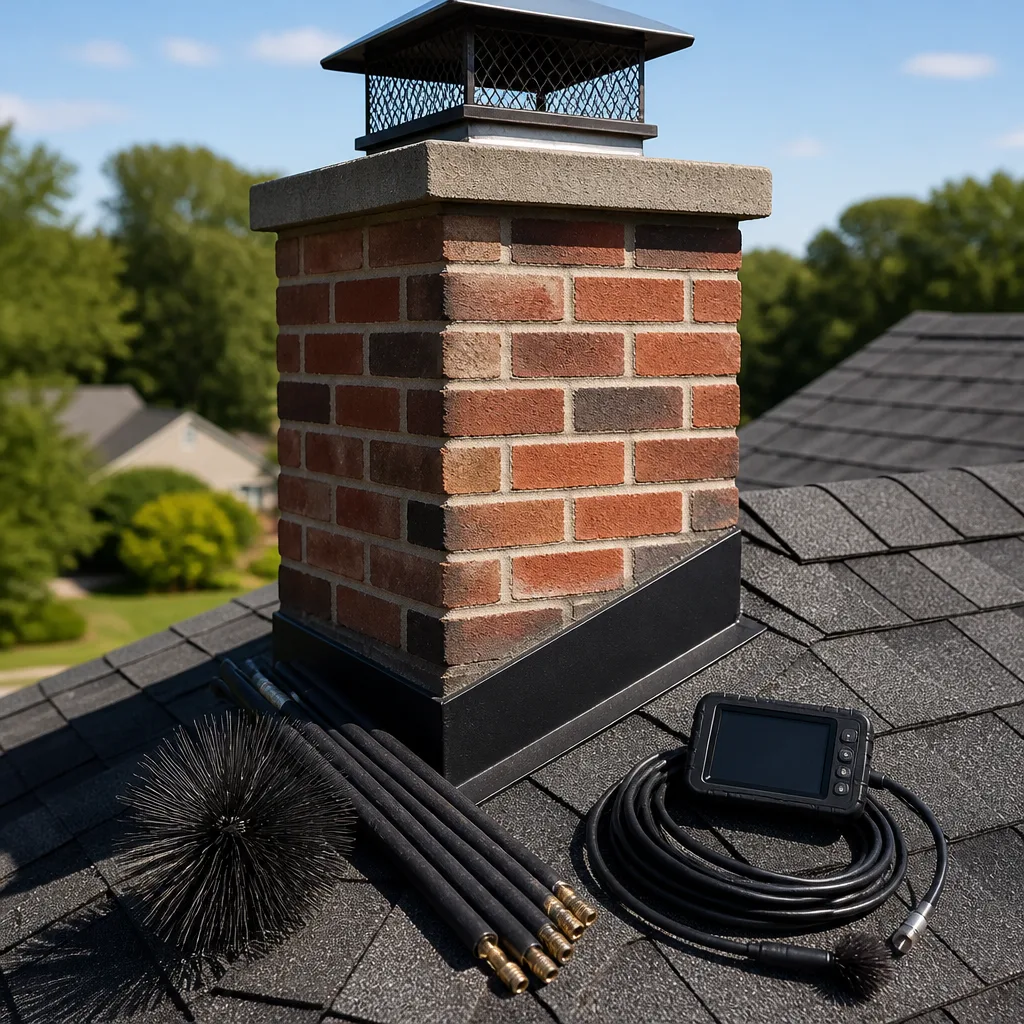
 Caps & crowns
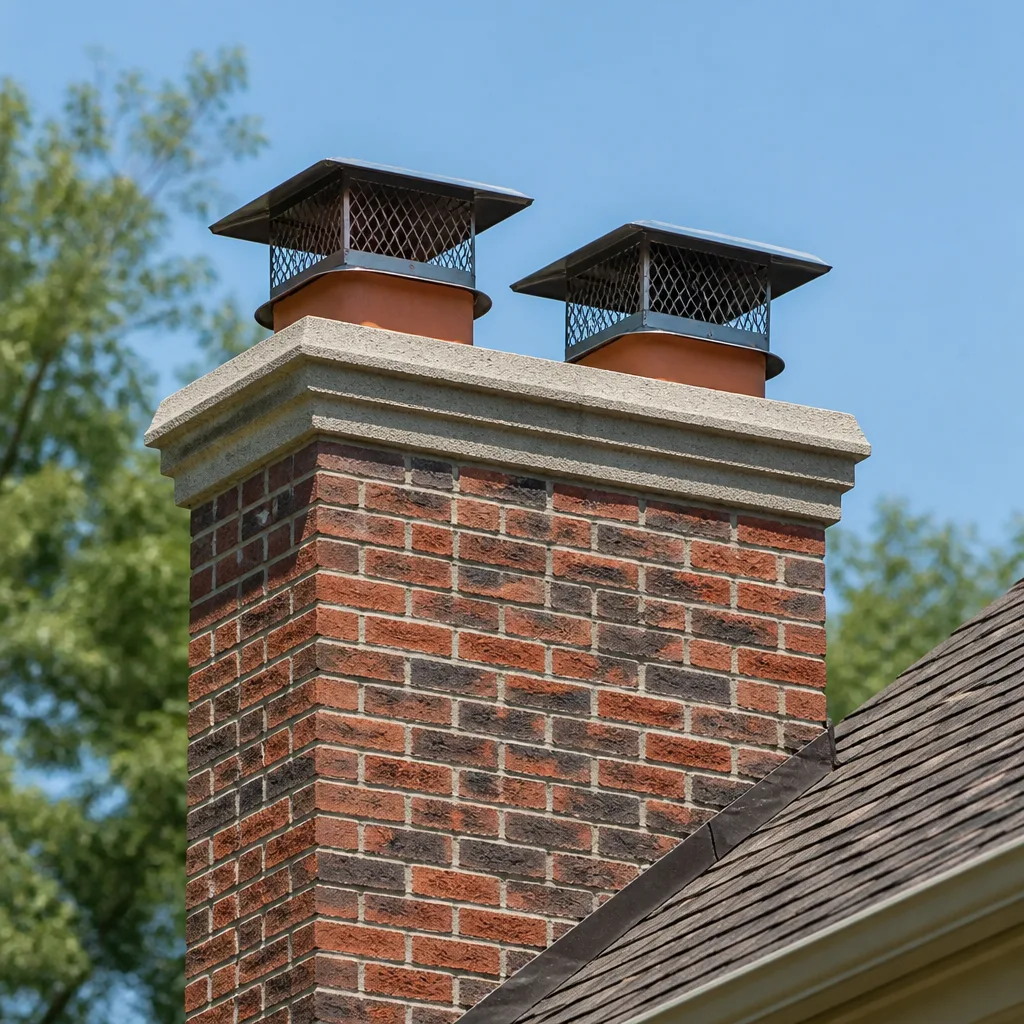
 Flue relining
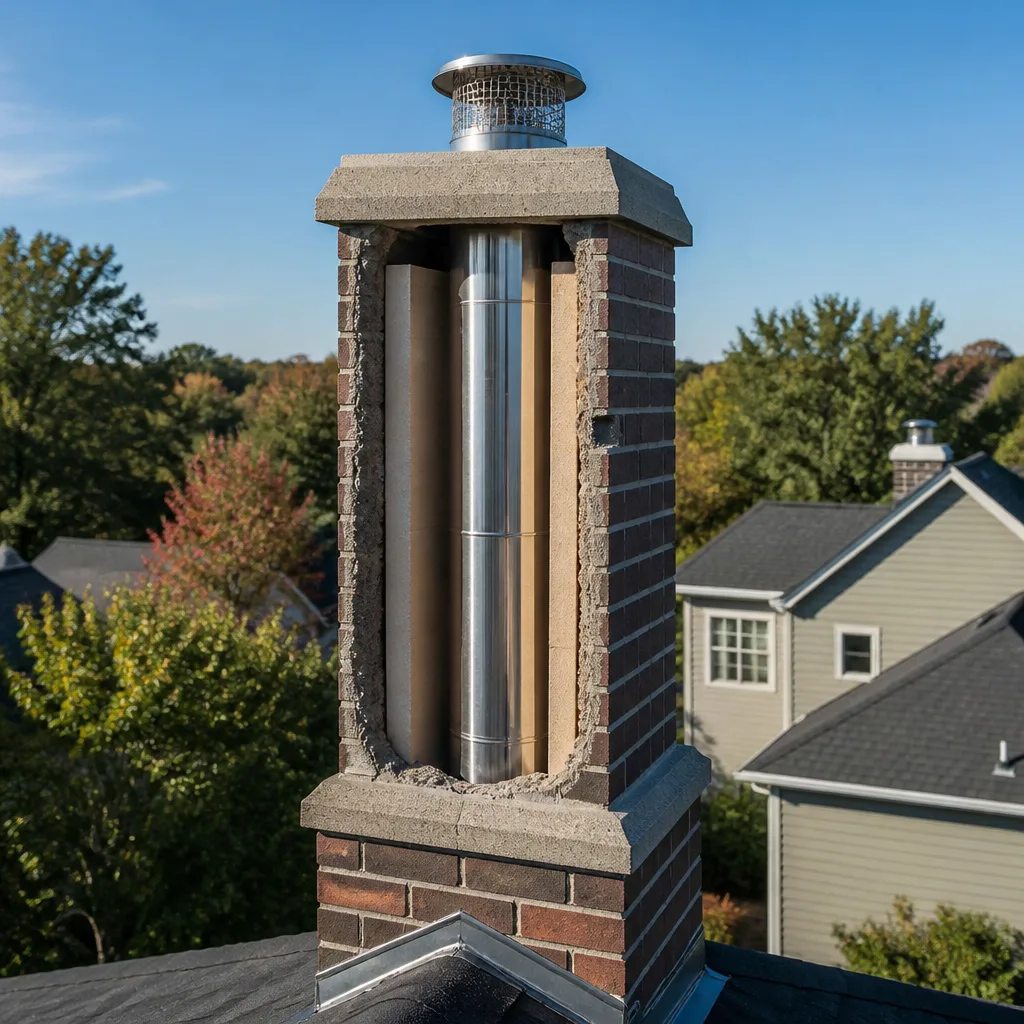
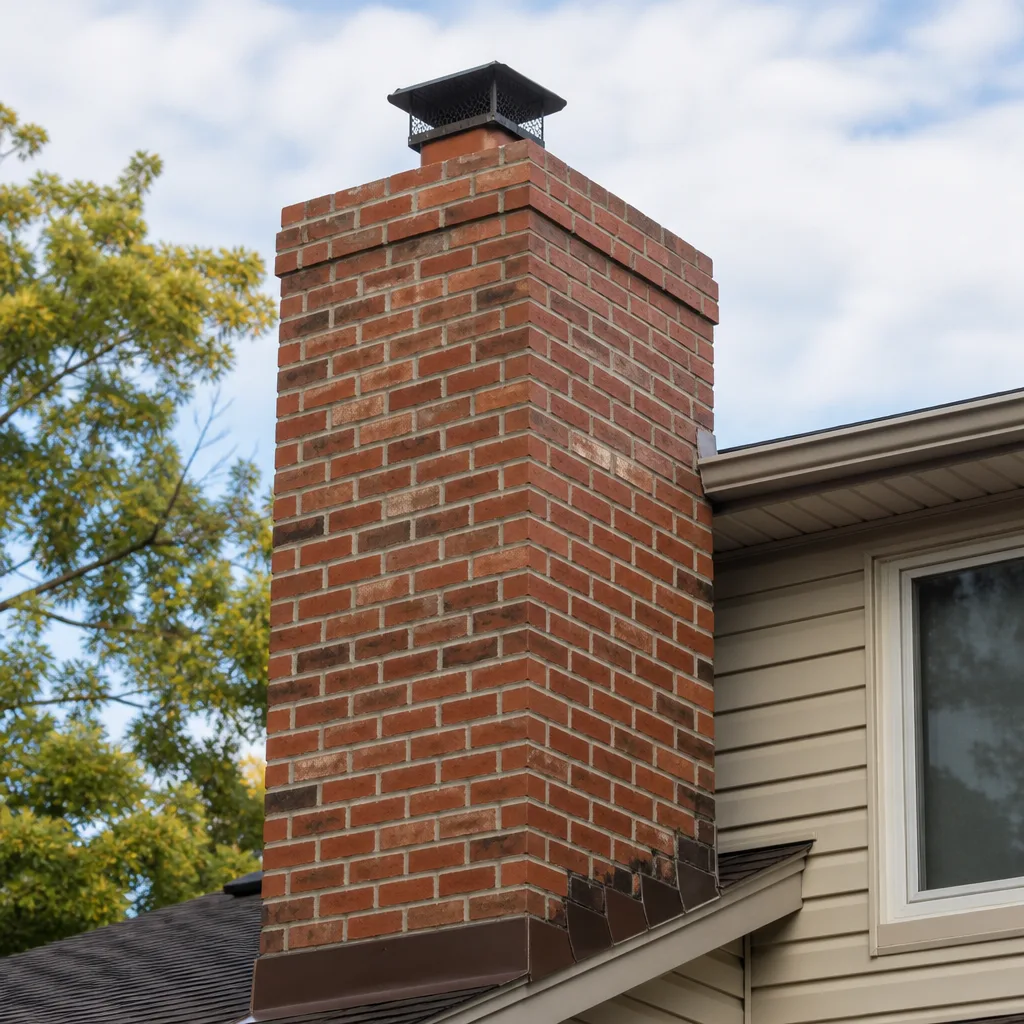 Masonry repair
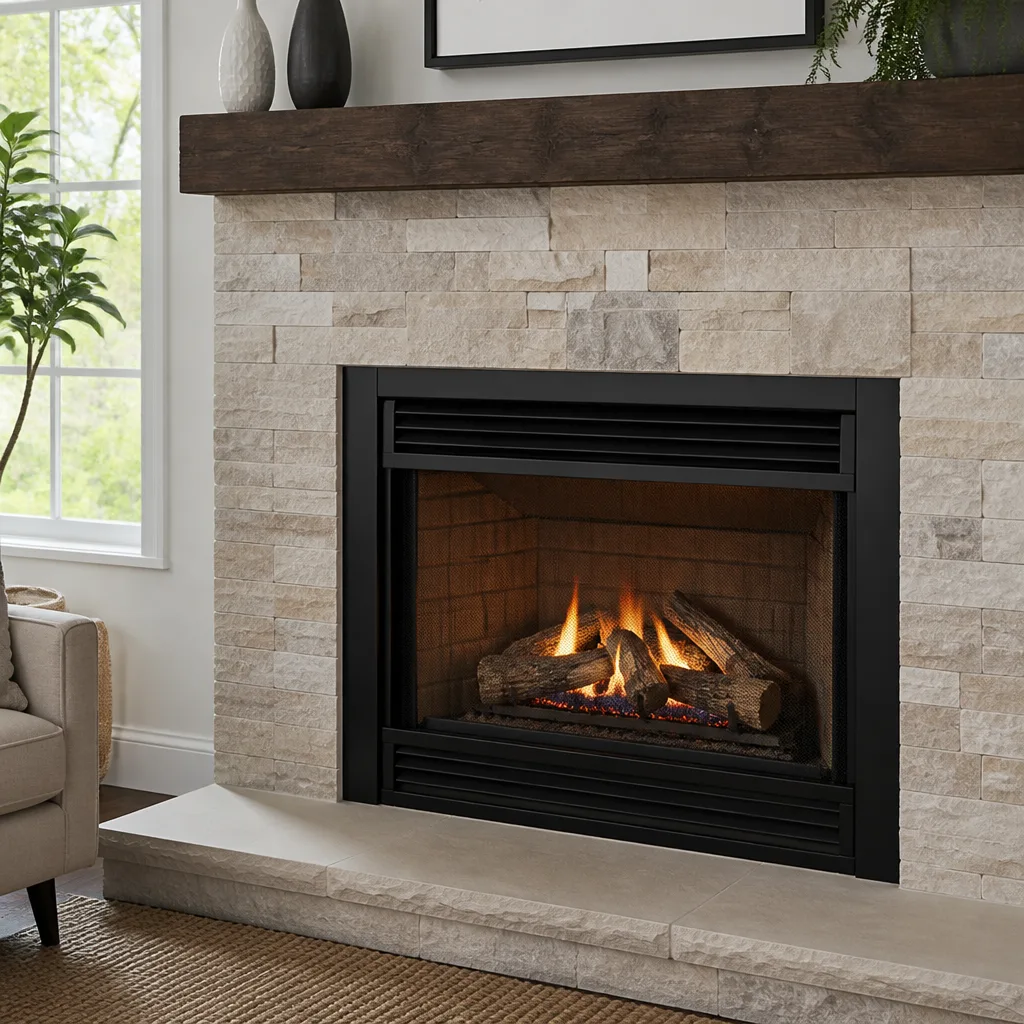 Gas fireplace service
Level 1 sweep and inspection to the NFPA 211 annual standard - flue, crown, cap, and flashing checked and photographed
Chimney sweep logs do not sweep chimneys. They loosen some creosote - which then falls where a brush and vacuum still have to collect it.
Fast, Reliable Chimney Sweep Across Lake Balboa
A chimney sweep in Lake Balboa typically costs between $189 and $329 depending on the condition of the flue, the type of fireplace, and whether a Level 2 inspection is needed. Most homes in the 91406 ZIP were built in the 1950s and 1960s, which means their masonry fireplaces and clay tile flues have had decades to accumulate creosote, soot, and structural wear. We work throughout Lake Balboa, from the tract neighborhoods near Victory Boulevard up through the blocks around Louise Avenue and the area near Balboa Park. When you call (877) 939-1446, you’re scheduling with a team that knows this housing stock well, because we see the same fireplaces, the same shared chimneys, and the same heatilator configurations on a weekly basis.
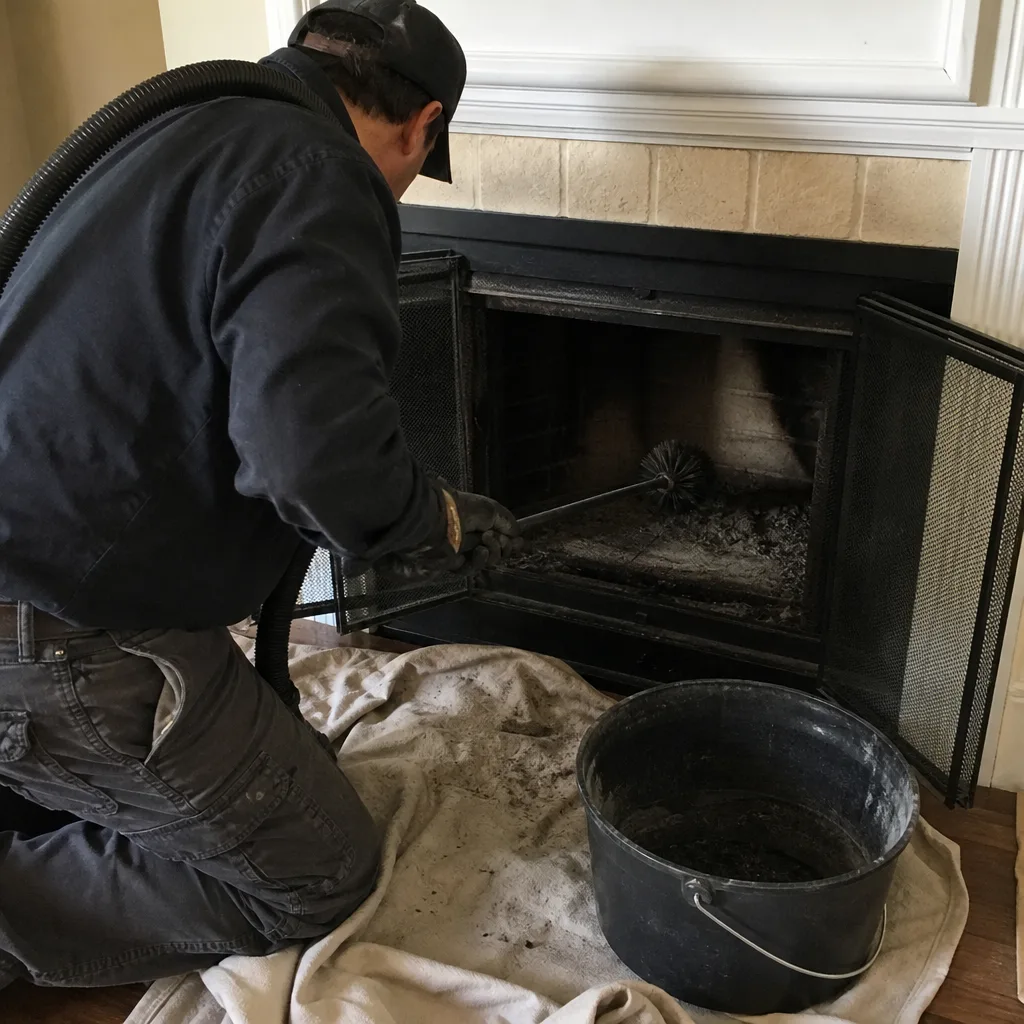
Why Chimney Sweep Winnetka Is Lake Balboa’s Preferred Chimney Sweep Company
Noel Braddock leads our team, and his approach is straightforward: show the homeowner what we found, explain what actually needs to be done, and never recommend work that can’t be verified with camera evidence. That matters in a neighborhood like Lake Balboa, where a lot of the original fireplaces have never been touched since the Eisenhower administration. We know these chimneys. We know what they look like when a damper has been missing for twenty years. We know what a cracked firebox sounds like when tapped with a masonry hammer.
Our Chimney Sweep crews are in Lake Balboa several times each week, which means scheduling is flexible and we don’t treat a visit to the 91406 as a special trip. That regular presence means we’ve built a working knowledge of the specific failure patterns in these blocks, from the 1950s heatilator fireplaces near the Sepulveda Basin to the shared chimney stacks in the duplexes off Sherman Way. We’re not guessing when we tell you what your chimney needs. We’ve seen dozens of its twins.
When homeowners call us for the first time, the most common thing we hear is that they inherited a fireplace they’ve never used and they’re not sure if it’s safe. That’s an honest question. We treat it that way. We don’t upsell, we don’t invent liner problems, and we always back up our recommendations with inspection photos you can see yourself.
Styles & brands we work with
- Sweep & inspection
- Caps & crowns
- Flue relining
- Masonry repair
- Gas fireplace service
Chimney Cleaning in Lake Balboa
Chimney Cleaning in Lake Balboa means removing creosote and soot from flues that were, in most cases, designed for occasional decorative fires rather than the regular use they’ve seen over sixty or seventy years. A standard cleaning here runs $189 to $259 for a single-flue masonry chimney. If the flue hasn’t been swept in years, or if there’s a heatilator system involved, expect that price to push toward the higher end because the job takes longer and requires more care.
For a Lake Balboa homeowner, the deciding question is creosote buildup. First-degree creosote is a dry, powdery soot that brushes off fairly easily. Second-degree creosote is the flaky, crunchy deposit that starts to restrict the flue. Third-degree creosote is the glossy, tar-like glaze that’s a genuine fire hazard and often requires chemical treatment or mechanical removal. We’ve seen plenty of third-degree creosote in these older chimneys, particularly when a previous homeowner burned unseasoned wood or pine.
Annual Soot And Creosote Removal
We remove soot and creosote using professional rotary brushes sized to the flue, not hardware-store push rods. For Lake Balboa’s aging clay tile liners, this matters. Aggressive brushing can crack an old flue tile, and then you’ve got a repair problem you didn’t have before we arrived. Our techs inspect the flue as they work, checking for spalling, gaps, and cracks as they go.
Most homes in Lake Balboa should be swept annually if the fireplace is used at all during the winter months. Even a dozen fires a year produces enough creosote to matter, especially in a flue that’s already partially restricted from years of use.
Level 1 And Level 2 Inspections
A Level 1 inspection is the visual check that happens during a routine sweep. We look at the accessible portions of the fireplace, the flue, and the exterior of the chimney. A Level 2 inspection is what we recommend when something changes: a new appliance, a property sale, a fire or chimney event, or suspected cross-contamination from a shared stack. The Level 2 uses camera equipment to inspect the interior of the flue and the attic or crawlspace pass-through areas. In Lake Balboa, with its attached housing and shared chimney configurations, the Level 2 is often the only way to see what’s actually happening inside the stack.
Fireplace Cleaning in Lake Balboa
Fireplace Cleaning in Lake Balboa means more than vacuuming out the firebox. Most of the homes here have original 1950s and 1960s masonry fireboxes, and a meaningful subset have the metal heatilator-style fireplaces with circulating vents and grates. Fireplace cleaning alone runs $129 to $179, and it’s a distinct service from the flue sweep. A thorough job covers the firebox, the smoke chamber, the damper assembly, and the throat area where soot collects.
The smoke chamber is where we find the most buildup in Lake Balboa homes. It’s the area above the damper and below the flue, and it accumulates creosote faster than any other part of the system. In an older fireplace, the smoke chamber may have corbelled brickwork that catches soot in every joint. We use specialized tools to reach those surfaces. Skipping the smoke chamber is the difference between a real cleaning and a cosmetic one.
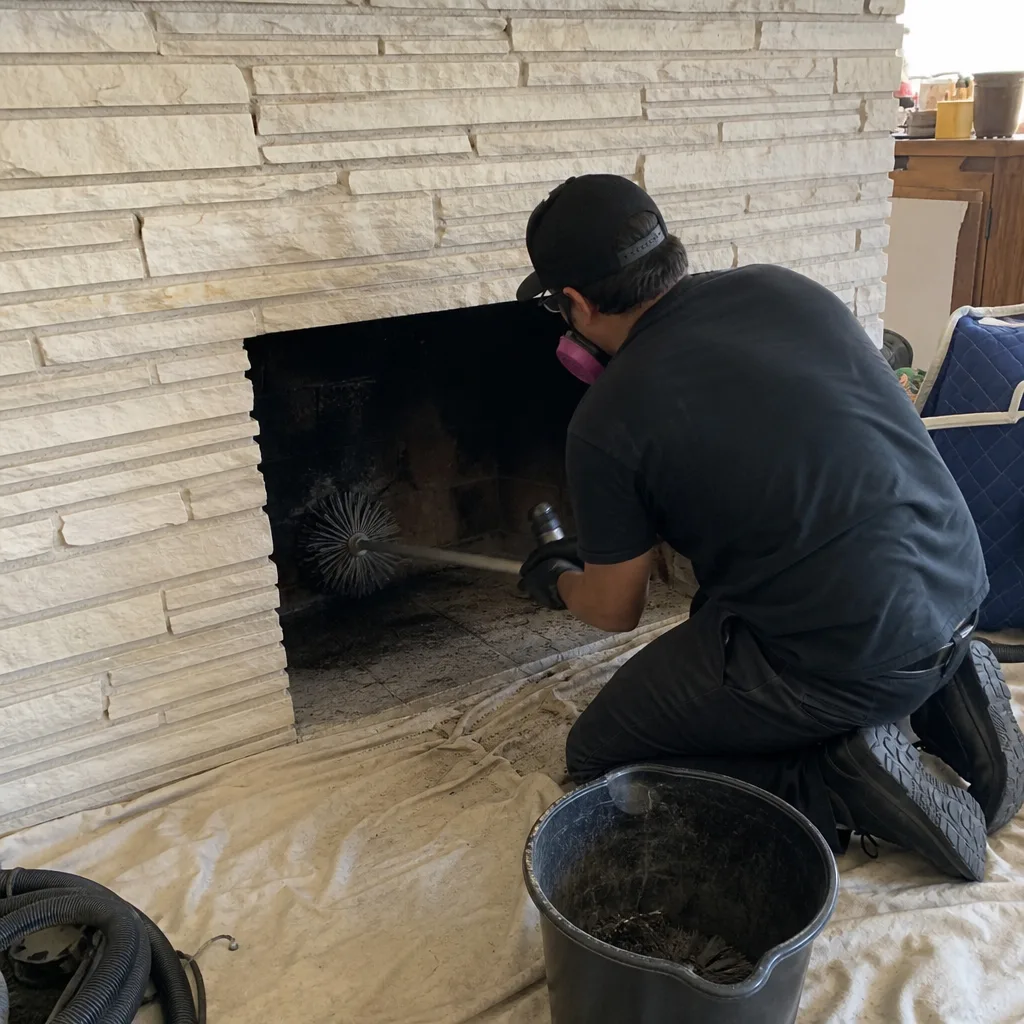
Heatilator Fireplace Care
If your Lake Balboa home has one of the original heatilator fireplaces, you need a technician who knows how to clean it without wrecking the internal components. These systems use metal grates and circulating vents to push warm air into the room. Generic cleaning methods can bend the grates, clog the vents, or break the metal baffles. Replacement parts for these old heatilators aren’t easy to find, so damage is expensive.
We treat these systems carefully. The metal components get cleaned without aggressive brushing, the vents are checked for blockage, and we inspect the firebox lining for cracks that would let combustion gases into the living space. In a 1950s heatilator, a cracked firebox isn’t just a cosmetic issue. It’s a direct route for smoke and carbon monoxide.
Missing And Damaged Dampers
An astonishing number of original Lake Balboa fireplaces don’t have a working damper anymore. Some were removed, some rusted out, and some were never replaced after a previous repair. A missing damper means your chimney is an open hole to the outside. You lose conditioned air in the summer, you get backdrafts when the wind blows, and you give birds and rodents an entry point. We can source and install replacement dampers for most of the common configurations in these tract homes. It’s one of the simplest fixes that makes a big difference.
Trusted Brands We Service in Lake Balboa
We don’t stock off-the-shelf parts from the big-box hardware aisle. When a Lake Balboa home needs a liner, a damper, a chimney cap, or a venting termination, we install products from DuraFlex, HeatShield, Famco, and Copperfield, because those are the brands chimney professionals rely on. If your clay tile flue has cracked and needs resurfacing, a Lake Balboa HeatShield service is often the right answer for an older masonry chimney. If you need a flexible liner, DuraFlex is our standard. We carry local inventory for the most common Lake Balboa applications, which means we can usually complete a relining or cap replacement without waiting weeks for parts.
See the difference
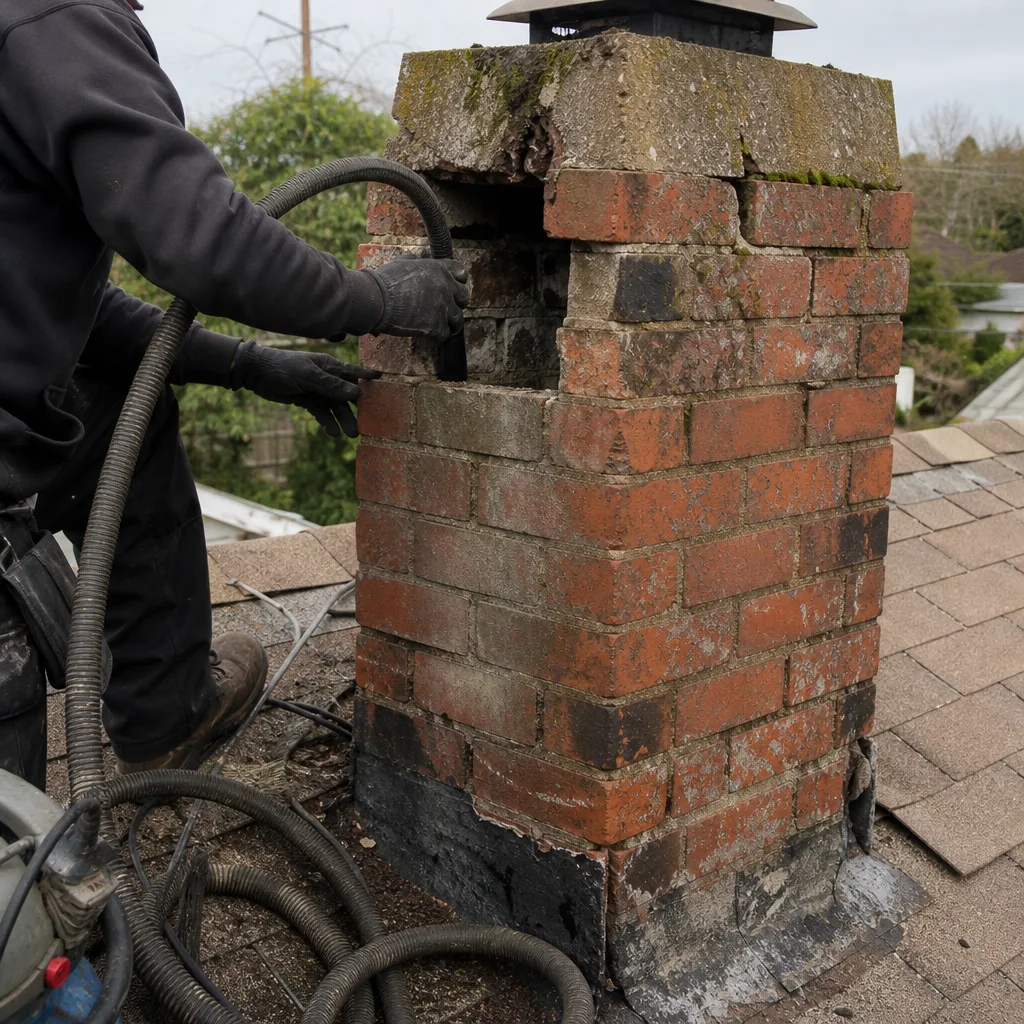 Before
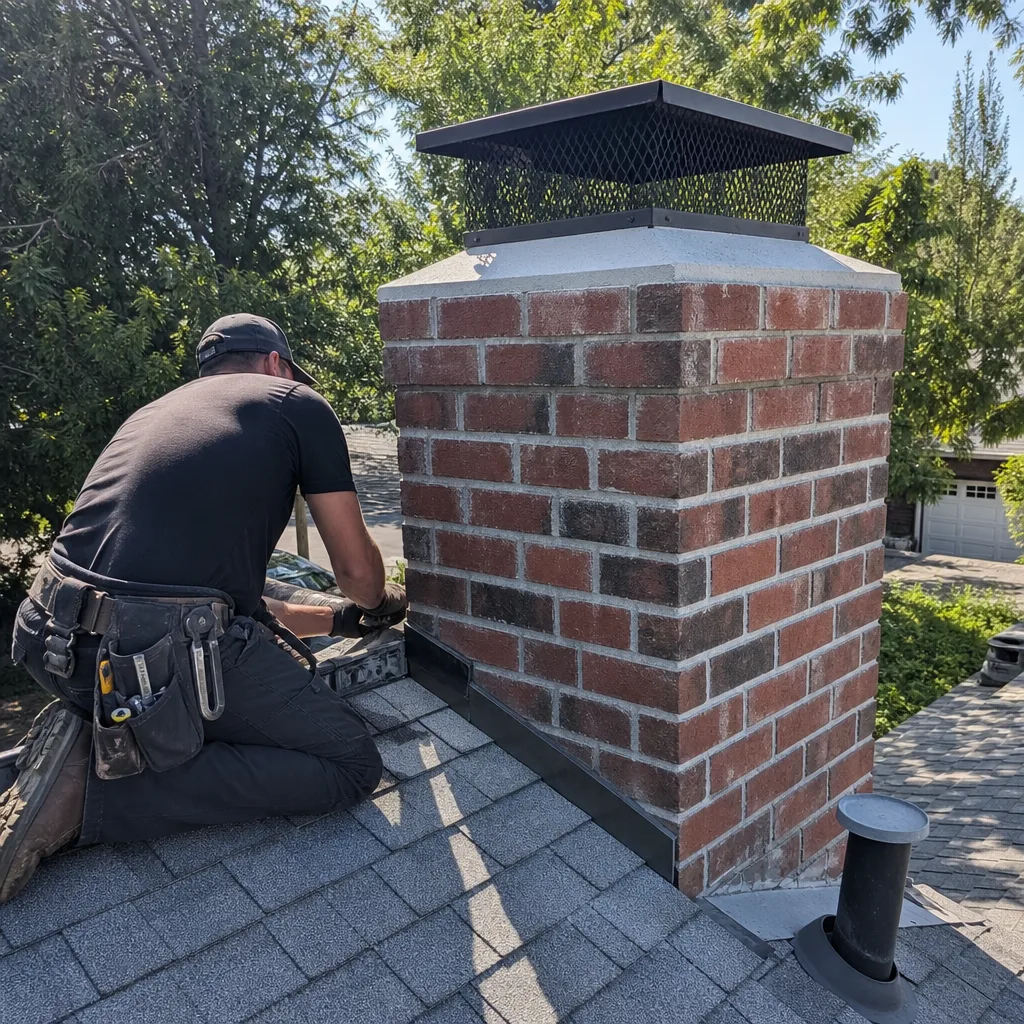 After
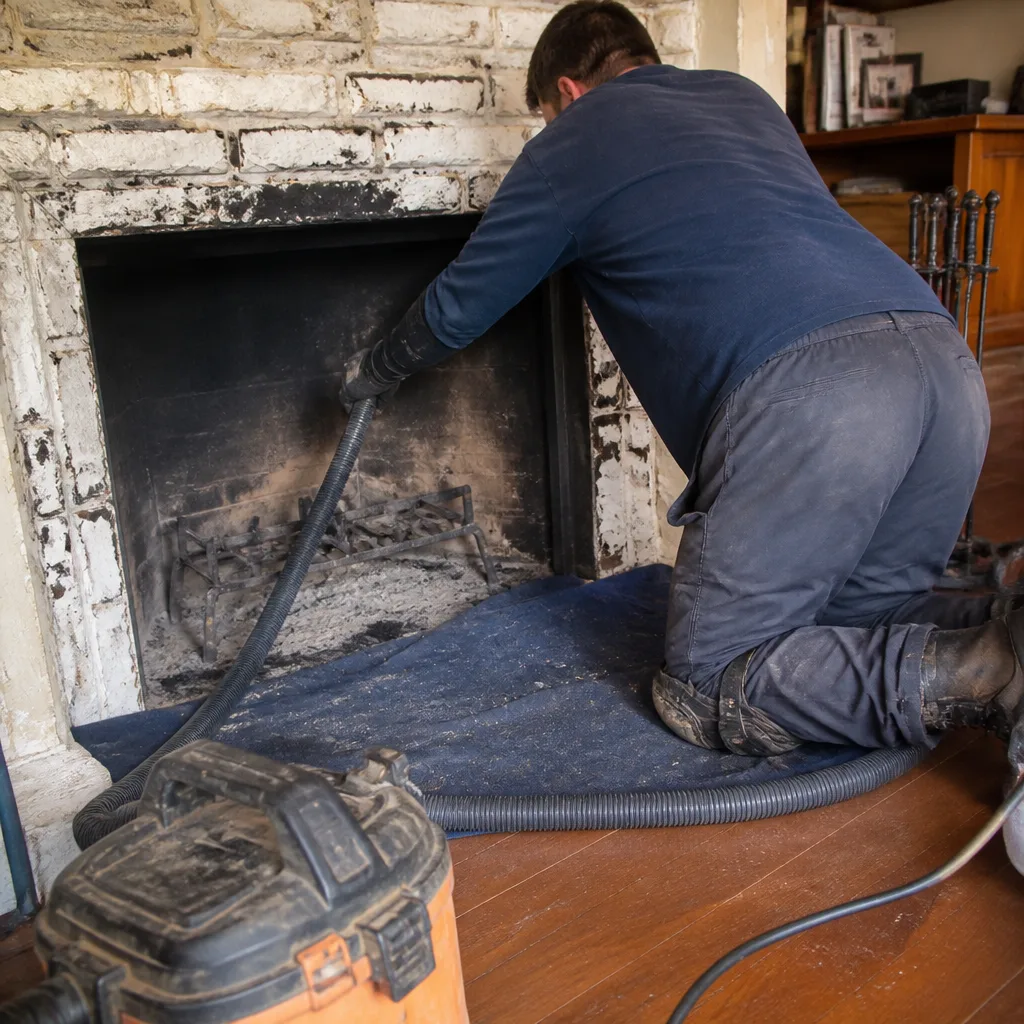 Before
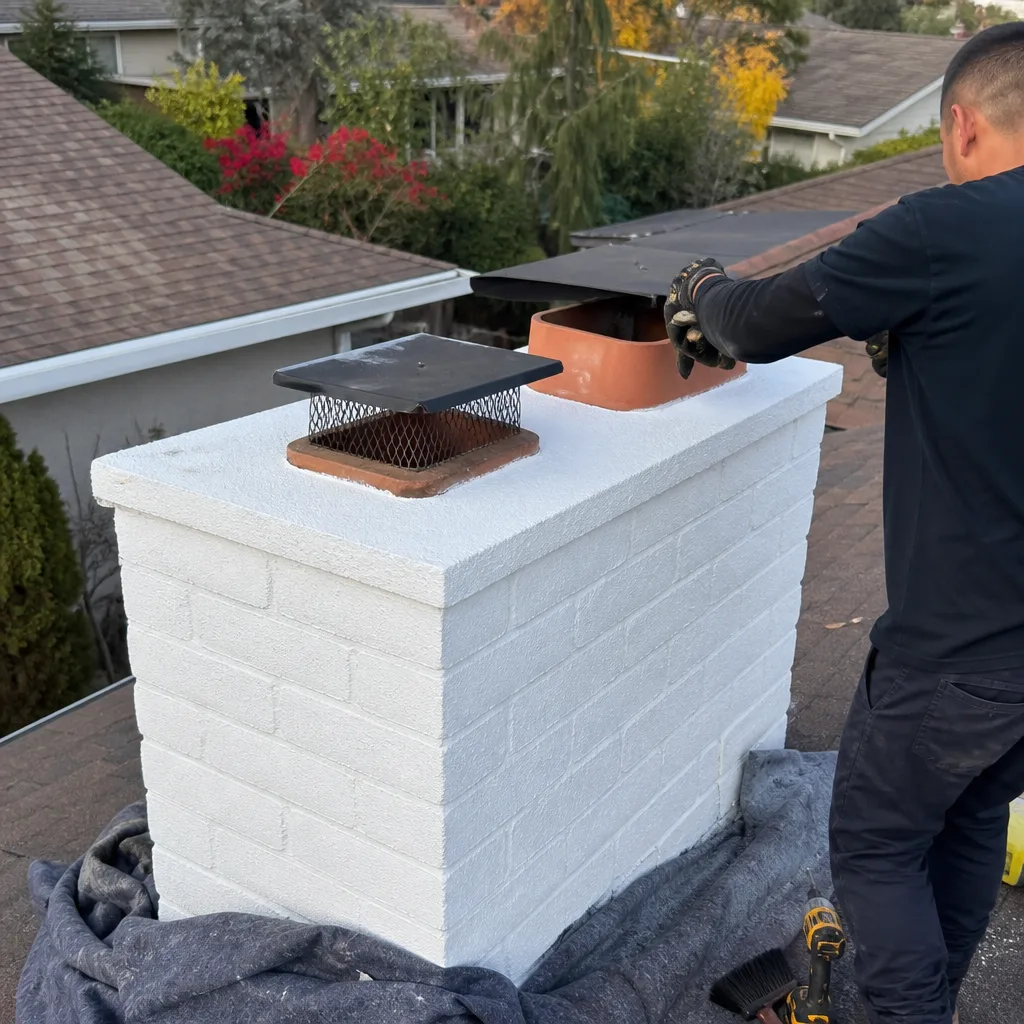 After
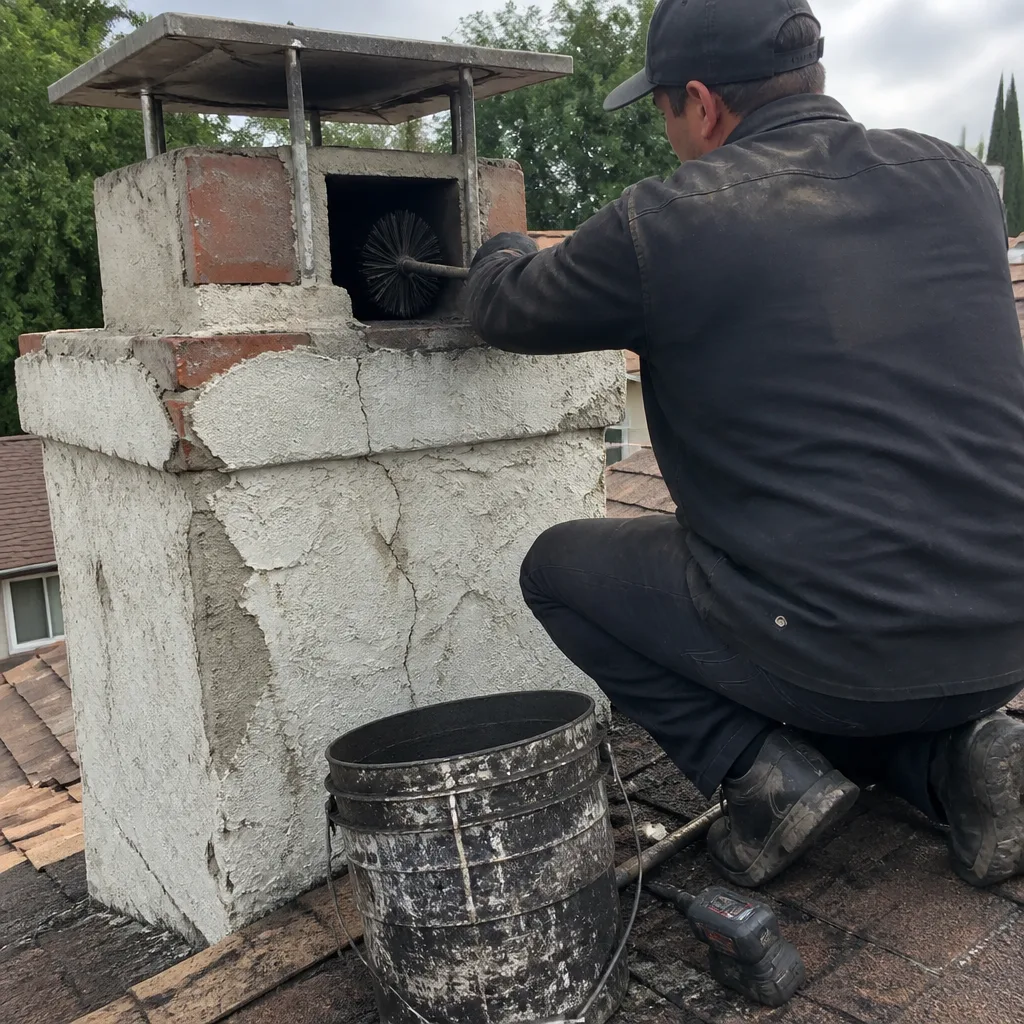 Before
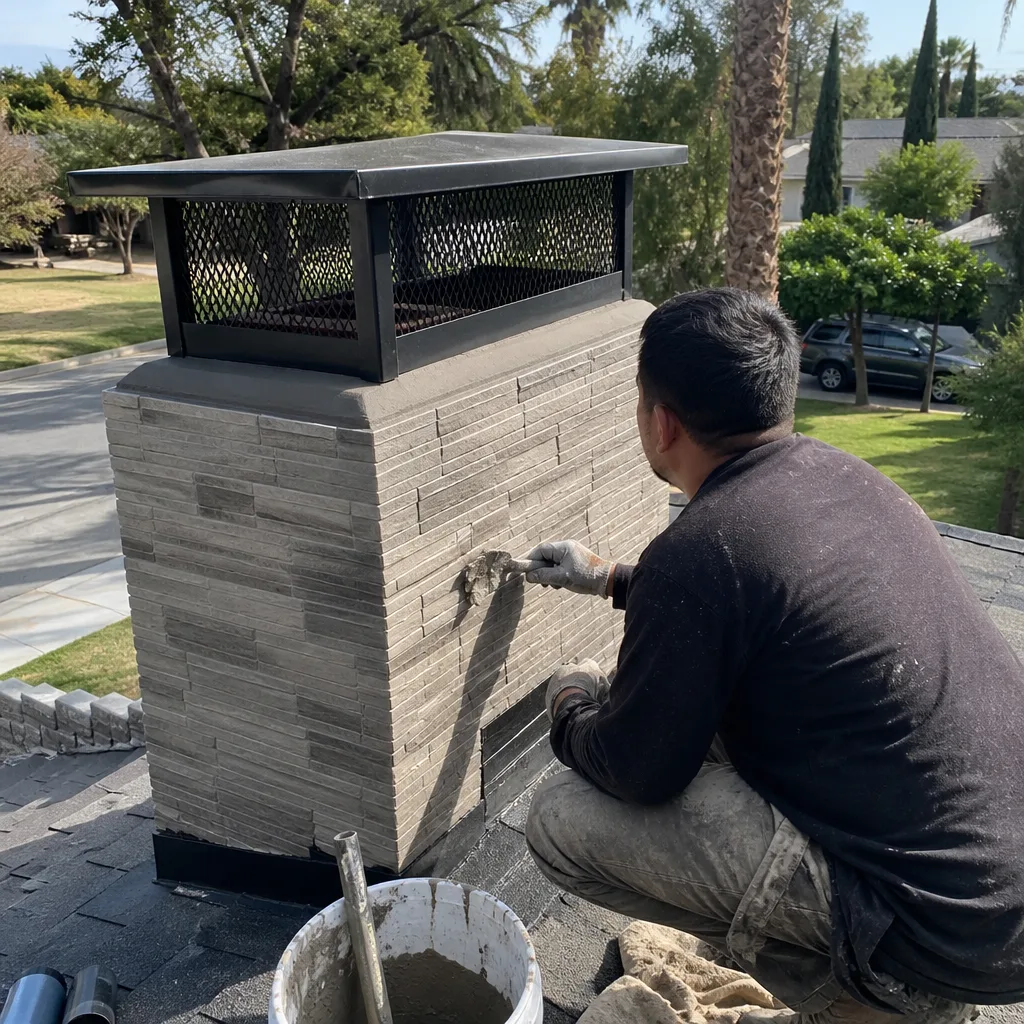 After
Common Chimney Sweep Problems We See in Lake Balboa Homes
- Shared chimney stacks causing cross-contamination. Many Lake Balboa duplexes and attached homes share a single masonry stack between units. When a neighbor’s appliance vents into the shared flue, their exhaust can seep into your home through failed seals, broken dampers, or cracks in the brickwork. We’ve seen this happen repeatedly in the 91406 tract. A Level 2 inspection tells you whether your stack is truly isolated.
- Cracked fireboxes in original masonry fireplaces. Sixty years of heating and cooling works on mortar joints. Lake Balboa’s seasonally warm climate means the masonry expands and contracts, and over time that movement opens hairline cracks in the firebox and the smoke chamber. A cracked firebox lets combustion gases into places they shouldn’t be. It’s repairable, but only if it’s caught before it worsens.
- Missing or rusted chimney caps. Lake Balboa’s occasional winter rains don’t sound like much, but when an uncapped chimney gets wet season after season, the water soaks into the masonry and accelerates spalling. We find rusted-out caps and missing spark arrestors constantly. Installing a proper Famco or Copperfield cap is cheap insurance compared to masonry repair.
- Heatilator vents clogged with decades of dust and creosote. The original heatilator fireplaces in this area haven’t been cleaned in most cases. The circulating vents fill with dust, pet hair, and creosote residue, which reduces airflow and creates a fire hazard inside the metal chase. A standard chimney sweep often skips these entirely. We don’t.
Pricing for Chimney Sweep in Lake Balboa, CA
A basic Chimney Sweep in Lake Balboa with a Level 1 inspection runs $189 to $259. Add a fireplace cleaning and you’re looking at $318 to $438 total. A Level 2 camera inspection for a shared-stack or heatilator system typically adds $150 to $250. If the inspection reveals a cracked firebox that needs sealing, a HeatShield liner resurfacing for a standard single-flue chimney in this area usually lands between $1,800 and $3,400, depending on flue length and access. Roof access in Lake Balboa’s dense tracts can add time when the chimney is in a tight spot, but we quote that before we start. Call (877) 939-1446 and we’ll give you a flat price for the sweep before we book. Estimates are free.
We Also Serve Cities Near Lake Balboa
We work throughout the west San Fernando Valley, including North Hills West, North Hills, North Hills East, and Panorama City. If you’re in a neighboring community and you need a Chimney Sweep team that treats your fireplace and dryer vent as fire-safety systems, we’ll come to you. Call (877) 939-1446 to schedule.
Serving Lake Balboa, CA – Our Local Coverage Area
We’re based in the Lake Balboa area and know this community well. Use the map below to see our service coverage – if you’re nearby, we can almost certainly help.
FAQs About Chimney Sweep in Lake Balboa
Yes, it can, and it happens more often than people realize. Shared chimney stacks in Lake Balboa’s attached duplexes and row-style tract homes sometimes have internal separators that have cracked, or separate flue tiles that have separated over time. When that separation happens, your neighbor’s appliance exhaust or smoke can migrate into your flue and back into your living space. The only way to confirm it is with a Level 2 camera inspection. If the stack is compromised, sealing your flue with a HeatShield liner resolves it. Call (877) 939-1446 and we’ll take a look.
Even if you only use the fireplace once or twice a year, an inspection every two to three years is sensible for an older Lake Balboa home. You don’t need an annual sweep if you’re not burning, but you should still have the chimney checked periodically. Structural issues like cracked fireboxes, missing dampers, and water intrusion can develop whether or not you light fires. Each winter rain on an uncapped chimney does incremental damage, and seismic settling in the Valley has shifted a lot of these sixty-year-old foundations. A biennial inspection catches problems before they force a bigger repair.
First-degree creosote is a loose, powdery soot that brushes off without much effort. Third-degree creosote is a hard, glossy glaze that bonds to the flue wall and can ignite at high temperatures. It matters because a chimney fire fueled by third-degree creosote can crack the clay tile liner in a 1950s chimney, and once that liner is cracked, the fireplace isn’t safe to use until it’s relined. In Lake Balboa’s older homes, third-degree creosote usually means the previous owner burned green wood or let the chimney go years without cleaning. It’s removable, but it takes more than a standard sweep. Call (877) 939-1446 and we’ll assess what you’re dealing with.
Not always. The original heatilator fireplaces in Lake Balboa are metal systems with grates, circulating vents, and internal baffles that generic sweep methods can damage. A technician who isn’t familiar with these units can bend the metal grates, clog the vents with dislodged soot, or miss the firebox cracks that are the real safety concern. We clean these systems regularly, and we inspect the metal components for integrity instead of just vacuuming around them. Replacement parts for these heatilators are hard to source, so the cleaning has to be done carefully the first time.
They do. An uncapped chimney lets rain fall directly into the flue, where it mixes with creosote to form an acidic residue that eats at the mortar joints. Over several seasons, the masonry absorbs water, spalls, and begins to crumble. In a Lake Balboa home where the chimney hasn’t been touched since the 1960s, you’ve had sixty winters of that cycle. Adding a Famco or Copperfield chimney cap is one of the least expensive preventive repairs we do, and it stops the damage at the source. If you’re not sure whether your cap is still intact, give us a call at (877) 939-1446 and we’ll check it while we’re up there.
Written by Noel Braddock, Owner at Chimney Sweep Winnetka, serving Lake Balboa and the surrounding San Fernando Valley.