
Famco Chimney Sweep in Winnetka: A Homeowner’s Guide
FAMCO is a manufacturer of vent termination components – vent caps, dryer vent hoods, and sidewall vents – that professional chimney and venting technicians install when a homeowner’s existing hardware has failed or was undersized from the start. The brand matters because FAMCO builds these parts from heavier-gauge aluminum with tighter damper tolerances than most commodity covers on hardware store shelves, which directly affects how your chimney drafts, how your dryer exhausts, and how long either system lasts before it needs attention again. If you’d rather not sort this out yourself, call Chimney Sweep in Winnetka at (877) 939-1446 and we’ll take a look.
Most Winnetka homeowners never think about vent caps until one fails. Then it’s a scramble. This guide explains what FAMCO actually makes, why your technician might recommend it, and how to verify you’re getting professional-grade components instead of a quick patch.
What FAMCO Actually Manufactures
FAMCO (Fresh Air Manufacturing Company) builds vent termination products, not chimneys themselves. The distinction matters. When we talk about FAMCO in a chimney or dryer vent context, we’re talking about the hardware where the system meets the outside air.
Their catalog covers three main categories that come up on Winnetka service calls:
- Vent caps and chimney covers: The metal assembly that sits on top of a flue or vent pipe, keeping rain, birds, and debris out while letting exhaust gases escape. A failed vent cap is one of the most common issues we find during a routine chimney sweep.
- Dryer vent hoods: The exterior termination point for your dryer exhaust. FAMCO builds these with an integrated damper that seals when the dryer isn’t running, which keeps rodents and cold air out of the vent line.
- Sidewall vents: For appliances that exhaust horizontally through an exterior wall rather than vertically through the roof. These are common in Winnetka homes where gas water heaters or high-efficiency furnaces vent out the side.
We stock FAMCO products because they’re built to a spec that holds up. When a homeowner shows us a vent cap they bought at a big-box store that’s rusted through in two years, the gauge difference is obvious. FAMCO uses aluminum that doesn’t corrode the same way thinner stamped metal does, especially in Winnetka’s summer heat and winter wind cycles.
Why the Brand on Your Vent Cap Matters
Not all vent caps are created equal, and that’s not contractor snobbery – it’s material reality. The difference comes down to three things: aluminum gauge, damper tolerance, and screen design.
A heavier-gauge aluminum cap resists warping when Santa Ana winds push against it in the fall. Lighter caps flex. Over time, flexing creates gaps. Gaps let rain in. Rain in a flue turns creosote into an acidic sludge that corrodes masonry and liner surfaces. That’s a $300 vent cap turning into a $4,000 liner repair, and we see it in Winnetka every season.
Damper tolerance is less visible but more important. The damper inside a dryer vent hood or sidewall vent is the flap that opens when exhaust pushes out and closes when it stops. A tight-closing damper keeps outside air from backdrafting into the house. A sloppy damper lets cold air in, dust in, and – most critically – can allow combustion gases to drift back into living space under certain pressure conditions. FAMCO machines these dampers to close precisely, which is why we trust them over generic alternatives.
Screen mesh matters for fire safety and drafting. Cheap caps use wide mesh that lets sparks through onto the roof. FAMCO caps use narrower mesh that catches embers without clogging with creosote. Clogged mesh is itself a hazard – it blocks draft and can turn a wood-burning fireplace into a smoke machine inside your living room.
Where FAMCO Products Appear in a Typical Service Call
Let’s walk through what actually happens when a Winnetka homeowner books a chimney sweep or dryer vent cleaning with us, and where FAMCO parts enter the picture.
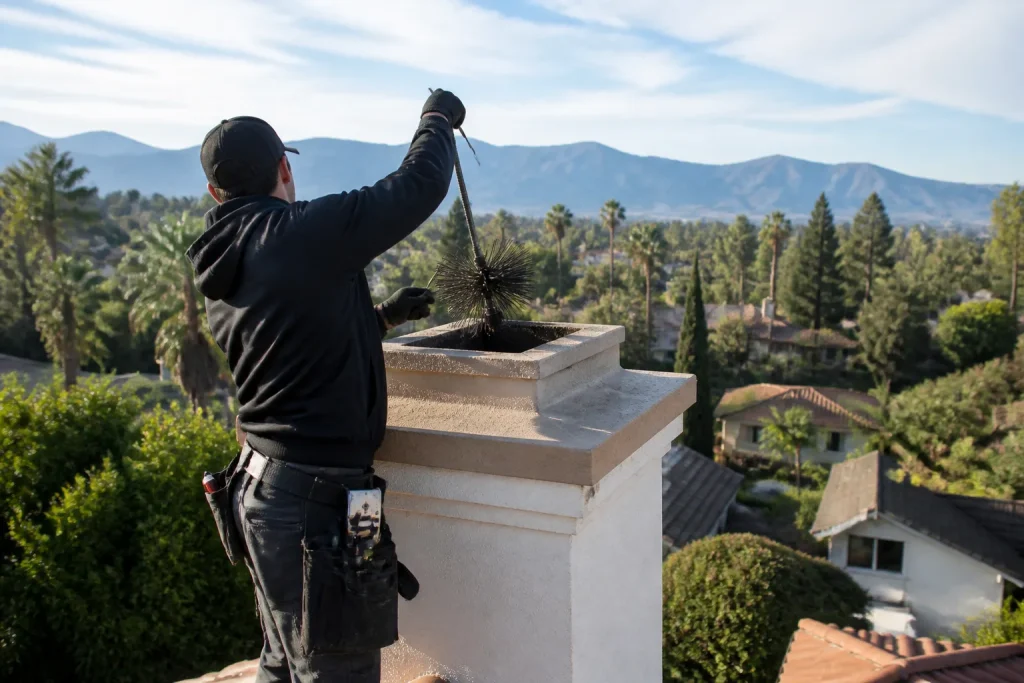
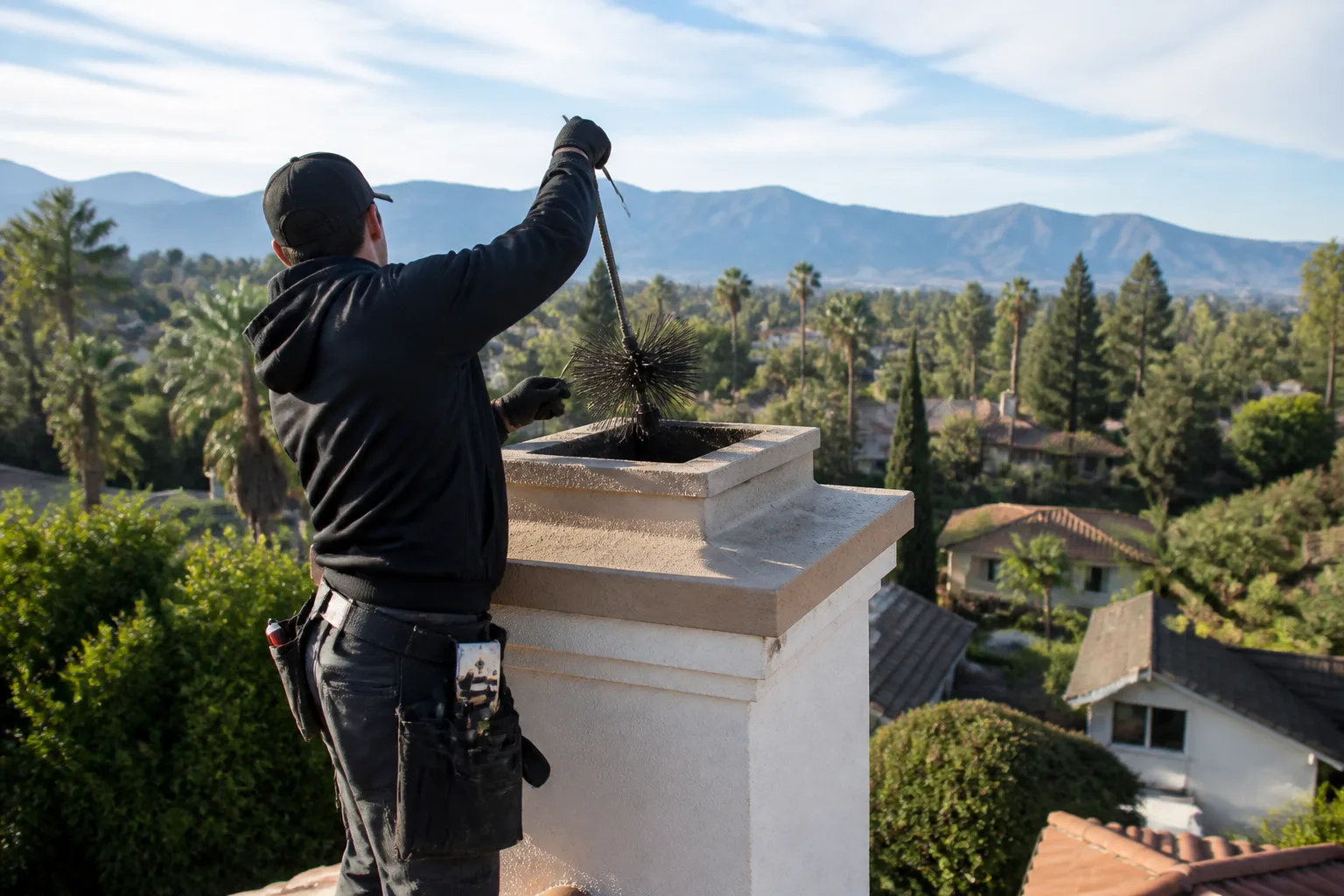
During a standard chimney sweep in Winnetka, we inspect the top of the flue as part of the job. If the existing vent cap is rusted, bent, or missing – which happens more than you’d think, especially after wind storms – we’ll show you the condition and recommend a replacement. We don’t upsell. If your cap is intact and functioning, we say so and move on. If it’s failing, we’ll quote a FAMCO cap and explain why it’s worth the investment.
On a dryer vent cleaning call, the exterior hood is always part of the inspection. Older Winnetka homes often still have plastic or thin-metal louvers on the outside wall. Plastic cracks in the sun. Cracks let birds and rodents into the vent line. A FAMCO aluminum hood with a proper damper eliminates that failure mode, and it’s a straightforward install while we’re already on site.
The repair side is where FAMCO gets more interesting. When we install chimney repairs in Winnetka involving liner work, we use DuraFlex flexible liner systems and HeatShield resurfacing compound – both professional-grade materials you won’t find at retail. FAMCO vent termination components complete the system. You can’t run a proper liner and then cap it with a flimsy cover; that defeats the purpose. The cap and the liner have to work together to maintain draft and protect the flue.
How to Verify Professional-Grade Components on Your Invoice
This is the part almost no homeowner knows, and it’s the real value of reading this post. When a technician installs a vent cap, dryer hood, or sidewall vent, the part number goes on the invoice. You can verify it.
Here’s what to check:
- Look for a manufacturer name, not just a product description. “Vent cap” tells you nothing. “FAMCO 4″ vent cap” tells you exactly what was installed.
- Cross-reference the part number. FAMCO product numbers are searchable. If the invoice says FAMCO VC4, that’s a specific 4-inch vent cap. You can look it up and see what you paid for.
- Ask where it was sourced. If your technician says they picked it up at a hardware store that morning, that’s a different conversation than if they stock professional-brand inventory. We source from professional suppliers – Olympia Chimney, Gelco, Copperfield, and FAMCO – because those brands are what certified technicians use across the country.
- Check the gauge language. Real professional components will specify aluminum thickness in the specs. If the product description doesn’t mention gauge at all, it’s probably a commodity part.
None of this requires special tools or expertise. It’s reading an invoice with attention to detail. The quality of what gets installed on your home should be verifiable, and professional-grade components always are.
The Backdraft Connection: Why Termination Hardware Is a Safety Issue
Here’s where the safety conversation gets real, and it applies to both chimneys and dryer vents in Winnetka.
Backdrafting happens when exhaust gases that should flow up and out instead flow back into the house. It’s a known contributor to carbon monoxide incidents with gas appliances, and it’s a smoke problem with wood-burning fireplaces. Termination hardware plays a direct role in preventing it.
Proper vent caps and dampers maintain the upward pull of the flue by keeping the opening clear and preventing wind from driving air downward. When a cap is damaged or missing, wind can push smoke and gases back down the flue. When a dryer vent hood damper doesn’t close, outside air pressure can push lint-laden air back into the laundry room. In both cases, the fix is often a properly sized, properly installed termination component – which is exactly what FAMCO builds.
We’ve pulled vent caps off Winnetka chimneys that were so rusted the flue opening was half-blocked, and the homeowner had been living with a smoky fireplace for years assuming that’s just how wood fires behave. It’s not. A properly capped flue with good draft should not smoke back into the room. If it does, something’s wrong with the system – and termination hardware is often the culprit.
When to call a pro: if you see rust staining on the exterior cap, hear flapping during wind, smell smoke inside the house after a fire, or notice your dryer taking longer than normal to dry clothes, that’s the time to call (877) 939-1446. We’ll inspect the full venting path, not just the visible end of it.
What Questions to Ask Any Chimney or Venting Company
Whether you work with us or someone else, here are the questions that separate a quality contractor from a quick patch:
- “What brand of vent cap are you installing, and why?” A professional can answer this in one sentence. A handyman will say “a good one.”
- “Can I see the part before you install it?” Professional-grade components look different up close. Heavier metal, tighter seams, precise machining. If your technician is proud of the part they’re installing, that’s a good sign.
- “Does this come with a damper, and how does it seal?” For dryer vents and sidewall vents, the damper is the safety-critical component. If they can’t explain how it works, they shouldn’t be installing it.
- “Is the cap sized to the flue, or is it universal?” Universal caps are easier to stock but rarely fit perfectly. FAMCO makes specific sizes for specific flue dimensions, which matters for draft performance.
You don’t need to become a chimney expert to ask these questions. You just need to ask them and judge whether the answers sound knowledgeable or evasive.
Related services in Winnetka: if you’re dealing with a dryer vent that’s never been cleaned, Dryer Vent Cleaning in Winnetka is a separate service we offer, and it’s one of the top ways to reduce household fire risk. If you’ve been told you need a new liner or your cap has failed, our Chimney Repair in Winnetka service covers relining with DuraFlex and HeatShield resurfacing.
The Bottom Line
FAMCO components show up in professional chimney and dryer vent work because they’re built from heavier-gauge aluminum with tighter damper tolerances than commodity hardware-store parts – and in Winnetka’s heat, wind, and seasonal fire conditions, that difference translates into years of service life and safer venting. Most homeowners never think to ask what’s being installed on their flue or exterior wall. You now know better.
Key takeaways:
- FAMCO manufactures vent caps, dryer vent hoods, and sidewall vents – the termination points of your venting systems.
- Material gauge, damper tolerance, and mesh design directly affect longevity and safety.
- Professional-grade components should be verifiable on your invoice with a manufacturer name and part number.
- Proper termination hardware prevents backdrafting, which is a genuine carbon monoxide and smoke hazard.
- Asking the right questions about brands and specs separates real specialists from quick patches.
If you’re in Winnetka and want a professional eye on your chimney or dryer vent system, Chimney Sweep Winnetka home is where you’ll find our full service details. We offer free estimates – call (877) 939-1446 and we’ll schedule a time to look at what you’ve got.
Frequently Asked Questions
FAMCO (Fresh Air Manufacturing Company) makes vent termination components – vent caps, chimney covers, dryer vent hoods, and sidewall vents. They don’t manufacture chimneys, liners, or appliances. Their products are the hardware where venting systems meet the outside air, and they’re built from heavier aluminum than most hardware-store alternatives. That’s why professional chimney technicians in Winnetka stock them.
A cheaper cap will work temporarily, but it will likely rust, warp, or clog faster – especially in Winnetka’s weather. The cost difference between a commodity cap and a FAMCO cap is usually $40 to $100. The cost of a failed cap letting rain into your flue can run into the thousands if the liner or masonry gets damaged. This is a classic case where the cheaper option costs more over time. Call (877) 939-1446 for an exact quote on what your system needs.
Dryer vent hood installation is more accessible for a confident DIYer, but chimney cap installation often involves ladder work at roof height and understanding flue sizing and draft mechanics. The safety risk with roof work is significant, and improper sizing can make a chimney draft worse rather than better. We recommend having a trained professional handle any roof-level component. For the dryer hood, ask yourself if you’re comfortable working on an exterior wall and confirming the damper seals correctly – if not, it’s a quick add when we’re already cleaning your vent.
Look for rust staining, visible cracks or gaps, missing mesh, a damper that sticks open or flaps loosely in the wind, and – for dryer vents – lint building up around the exterior hood. Inside, signs of a failing termination include smoky smells after a fire, difficulty getting a fire going, or a dryer that takes forever to dry clothes. Any of these in a Winnetka home is worth a phone call. We’ll tell you plainly if it needs replacing or if it can safely wait another season.
Written by the team at Chimney Sweep Winnetka, serving Winnetka since 2014.
Need Chimney Cleaning Help?
Call Chimney Sweep Winnetka - licensed & insured, here with fast help in Winnetka.
(877) 939-1446